
RahrBSG Blog
Brewing Märzenbier and Festbier with Weyermann® Specialty Malts
Posted July 1, 2025 in Brewing
Once upon a time in the heart of old Bavaria, there lived a dashing Prince named Ludwig and the enchanting Princess Therese Charlotte Luise of Saxony-Hildburghausen.
In 1809, rumors swirled of a possible union between Princess Therese and Napoleon Bonaparte, the infamous French emperor and military commander.
Instead, on October 12, 1810, Therese married Ludwig in Munich. The royal wedding, which was Bavaria’s first in nearly a century, kicked off a five-day soiree on a meadow outside the city’s walls. There was much celebration. There was singing, dancing, feasting, and very probably there was beer. There was also a grand horse race on the festival’s final day.
Festival goers so loved the shindig they named the meadow Theresienwiese after their new crown princess. They returned the following year to honor her with additional horse races and their many impressive achievements in agriculture. This celebration became a mostly annual event, canceled in 1813 due to the Napoleonic Wars—him again!—and gradually evolved into Oktoberfest as we know it, the world’s largest and most popular folk festival.
Munich’s modern Oktoberfest spans 16 days and brings 6 million visitors to the Theresienwiese each year, with beer consumption often ranging from 6-8 million liters. That’s total consumption, of course, not personal. Hashtag Happily Ever After.
First Comes Love, Then Comes Märzenbier
German for “March beer,” traditional Märzen-style lagers existed long before they became synonymous with Oktoberfest. For centuries, extra-strength beer was brewed in the month of March and then matured for months in cold caves to prevent spoilage over the hot Bavarian summer. Likely dark brown in color and malty-sweet, these lagers were joyously consumed in October once the brewing season resumed.
In 1841, Spaten Brewery’s Märzenbier made its first appearance at Oktoberfest, officially establishing the beer style. Then in 1872, Spaten introduced a new amber Märzen lager bearing the Oktoberfest name. This beer wowed the crowds, and nearly 120 years passed before another brew would seize the festival’s foamy throne.
According to Beer Advocate dot com, Paulaner’s brewmaster acknowledged changing consumer tastes in the mid-1970s and debuted a “more poundable” pale lager. By 1990, this brilliant golden “Festbier” would overtake the traditional amber Märzenbier as the festival’s preferred style.
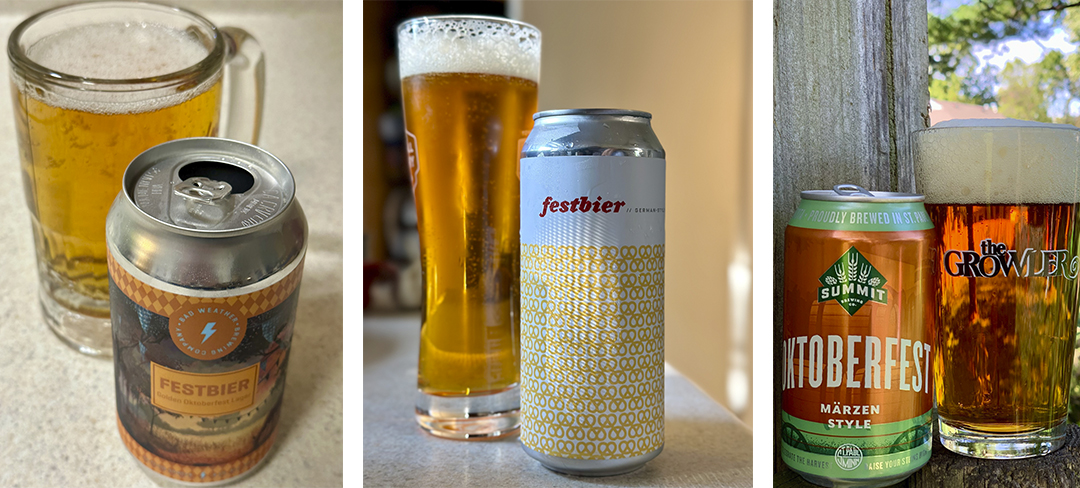
Märzenbier & Festbier Side-by-Side
- We’ve mentioned the Märzen style’s amber hue, which lands between 8-17 SRM. Additionally, the style calls for a rich malt profile of toasted bread coming from Munich malt. A light floral hop presence should offer balanced bitterness and the beer should finish clean and dry. A decoction mash is often used to bring even more malt flavor to the forefront. Traditional Märzens finish around 5.6-6.3% ABV and 18-24 IBU.
- Festbiers aren’t all that different in terms of ABV or IBU. When it comes to color, however, they shine deep yellow to gold and measure between 4-6 SRM. They also hide their strength behind unbelievable drinkability. Gone are the notes of toasted bread, replaced instead by Pilsner malt aromas of light toast and dough. Infusion mashes are the norm here. Hop bitterness is kept light and floral but supportive.
- Both styles ought to boast a persistent white to off-white foam stand. You know, that airy, slightly sweet, irresistibly hypnotic foam. The kind of foam you don’t forget. That’s what you want.
Source: bjcp.org
Ingredients to Get You Started
German Purity Laws do not apply in North America, and the Oktoberfest you brew is up to you! From traditional Märzens to true-to-style Festbiers to modern autumn-forward lagers that dare to be different, the following suggested ingredients are merely a starting point on your own personal journey to Theresienwiese.
Can’t Make Beer Without Malt
A Märzen-style lager starts with the finest malted barley from Germany. Munich Malt will make up much of your grist. We recommend mashing in with the following malts:
- Weyermann® Munich Malt Type 1
- Weyermann® Munich Malt Type 2
- Weyermann® Vienna Malt
- Weyermann® Pilsner Malt
- The entire Weyermann® Barke® line – Munich, Pilsner, and Vienna
- Weyermann® Isaria 1924®
A Festbier, on the other hand, is made to showcase German Pilsner Malt out in front. Small amounts of Vienna Malt or Munich Malt often play a supporting role in the style. Once again, for these ingredients our loyalties lie with the quality selections above from Weyermann® Specialty Malts.
Hops Have Their Place Too
To ensure appropriate hop spice in your Märzen, Festbier, or AI-enhanced Oktoberfest alternative, you mustn’t overlook high-quality German hops from HVG. Please pay particular attention to the following varieties:
- German Hallertau Mittelfrüh
- German Hersbrucker
- German Tettnanger
- German Hallertauer Tradition
- German Saphir
- German Select
Yeast Cannot Be Overlooked
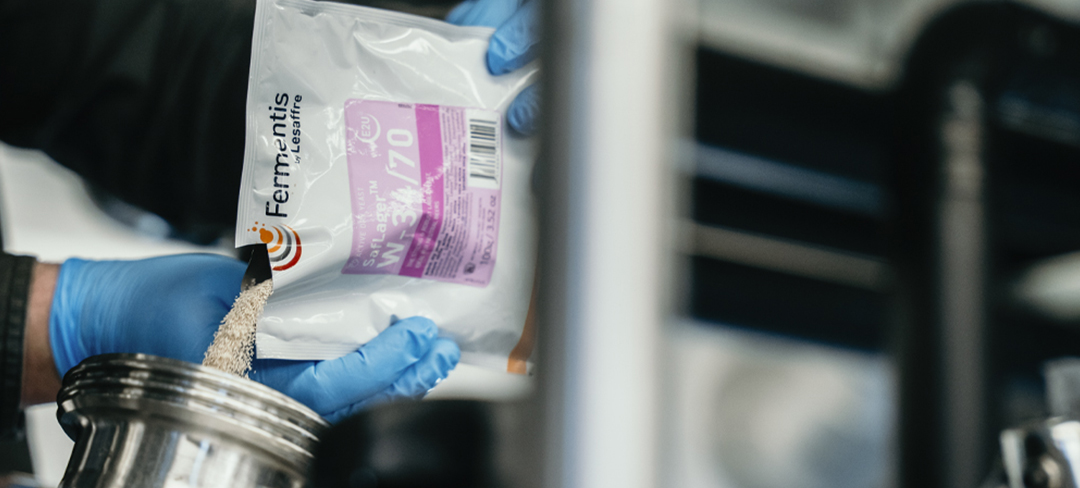
For brewing clean German lagers, we turn to Olaf Morgenroth, Head Brewer at Fermentis.
“It all comes down to style. You want to accentuate the malt flavors,” he says. “Fermentis SafLager™ W-34/70 does this well. It’s one of the most robust yeast strains on the market. It handles warmer temperatures very well and always produce clean, consistent results. I enjoy making German style lagers and this yeast is great for it.”
A Brief Discussion of Colored and Specialty Malts with RahrBSG Product Portfolio Manager Matt Johnson
Brewers looking to create Märzens and Festbiers with additional complexity have RahrBSG’s array of colored and specialty malts at their disposal.

Weyermann® CARAMUNICH® Type 1, Type 2, and Type 3 all provide a nice caramel/pastry type of flavor to the finished beer. Whatever variety you use, you can expect subtle caramel color with some nice, body-building malt flavor for Oktoberfest-style beers. The higher the number (1, 2, or 3), the more color and flavor is imparted in the beer.
Weyermann® CARAHELL® delivers a fuller body, improved aroma, and increased foam. Märzens and Festbiers brewed with CARAHELL benefit from a fuller, rounder flavor, deep copper color, and gentle notes of caramel.
Weyermann® Acidulated Malt helps brewers lower wort pH for better mash efficiency, vigorous fermentations, lighter color, enhanced flavor, and improved stability. It also contributes a nice acidic quality.
Commercial Examples
Märzen
Paulaner Oktoberfest Märzen
Great Lakes Oktoberfest
Firestone Walker Oaktoberfest
Summit Oktoberfest
Hacker-Pschorr Oktoberfest
Ayinger Oktoberfest
New Glarus Staghorn
Festbier
Augustiner-Brau Oktoberfestbier
Sierra Nevada Oktoberfest
Fair State Festbier
Human Robot Festbier
Bad Weather Festbier
Resources
https://www.bjcp.org/style/2021/6/6A/marzen/
https://www.bjcp.org/style/2021/4/4B/festbier/
https://www.beeradvocate.com/beer/styles/235/
https://www.alcoholprofessor.com/blog-posts/classic-beers-of-oktoberfest-festbier-marzen
https://en.wikipedia.org/wiki/Theresienwiese
https://resources.rahrbsg.com/its-time-to-brew-that-oktoberfest/